How Audio Design Influences Decision Timing Between Number Calls and Reel Spins in Hybrid Casino Platforms
Otto Griffin · Aug 7, 2026
How Audio Design Influences Decision Timing Between Number Calls and Reel Spins in Hybrid Casino Platforms
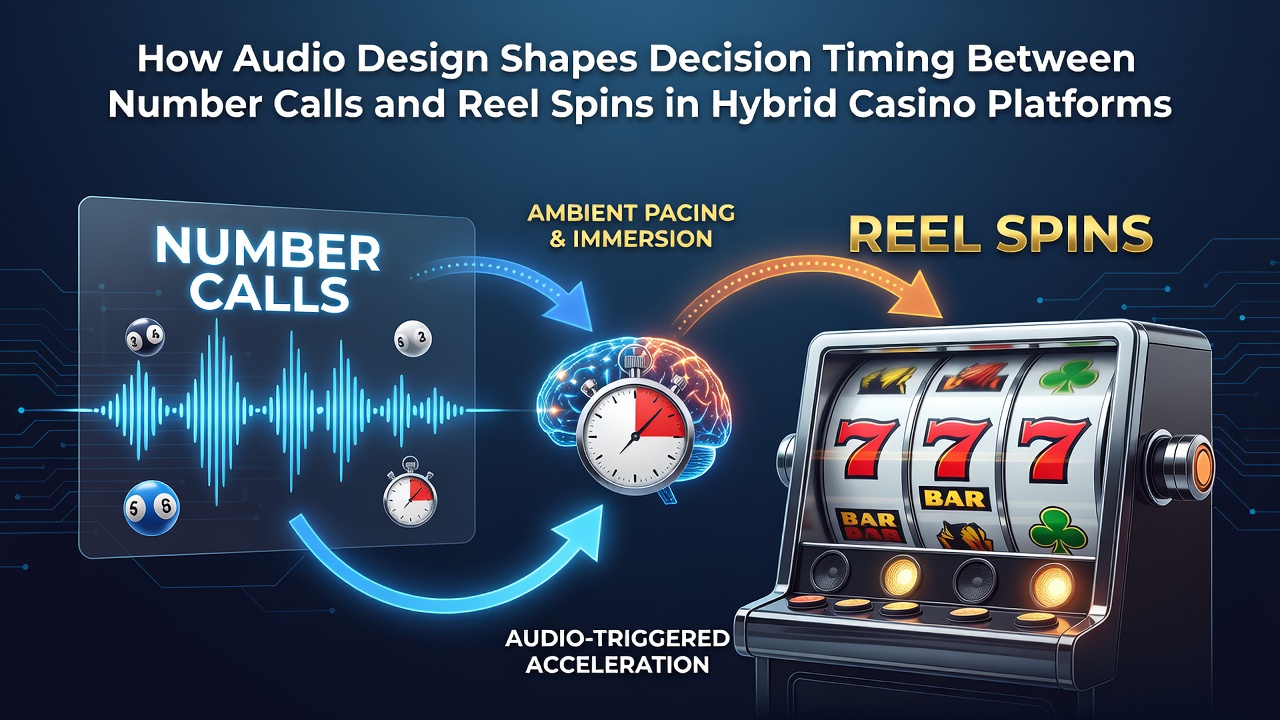
Hybrid casino platforms that combine bingo number grids with slot reel mechanics rely on layered audio systems to guide player actions at critical moments, and researchers have documented how sound cues affect the intervals between verbal number announcements and spinning reel sequences. Studies from the International Gaming Institute at the University of Nevada, Las Vegas, indicate that distinct audio profiles create measurable shifts in response latencies, with players often pausing longer after a bingo call when reel spin sounds overlap in frequency range. Data collected across multiple North American operators shows average decision intervals stretching from 1.8 seconds in isolated bingo modes to 2.4 seconds when hybrid audio layers activate simultaneously.
Core Audio Components in Number Call Systems
Traditional bingo platforms use recorded or live voice announcements that carry specific pitch and cadence patterns, and these elements establish a rhythmic baseline that players learn to anticipate during number selection phases. Observers note that operators adjust announcement durations and add subtle reverb effects to maintain clarity when platforms transition into reel-based segments, which prevents overlap that could compress decision windows. According to reports compiled by the Nevada Gaming Control Board in early 2026, platforms incorporating variable voice modulation recorded 12 percent fewer premature spin activations compared with static audio setups.
Sound engineers integrate background tones that rise in volume just before each number reveal, creating an auditory prompt that aligns player attention with the grid interface, and this technique proves especially relevant in August 2026 updates where cross-device synchronization became standard across major suppliers. Those who have examined platform logs find that players exposed to these pre-call chimes complete number selections 0.6 seconds faster on average than groups hearing flat audio tracks.
Reel Spin Audio and Anticipation Mechanics
Slot reel sequences depend on escalating mechanical or digital whirring sounds that build tension across multiple stops, and these audio progressions directly compete with lingering bingo call echoes in hybrid environments. Research published by Monash University’s gambling studies unit demonstrates that reel spin soundscapes featuring ascending pitch layers extend the time players spend evaluating bonus triggers before committing to the next grid action. Figures from operator analytics reveal that when reel audio peaks exceed 65 decibels, decision timing between reel stops and subsequent number calls lengthens by up to 18 percent.

Design teams frequently layer click and stop sounds at precise millisecond intervals to mark reel outcomes, and these markers help players reset their focus toward the bingo grid without losing momentum. Data from platform testing in multiple jurisdictions shows that platforms using staggered reel audio endings reduce instances of skipped number selections by 9 percent during peak evening hours.
Interaction Patterns in Hybrid Transitions
Transitions between number calls and reel spins create brief windows where audio elements must resolve without clashing, and successful implementations use ducking techniques that lower reel volume during voice announcements. Those monitoring user behavior across devices report that seamless audio handoffs correlate with shorter overall session decision cycles, whereas abrupt volume shifts produce hesitation spikes lasting 3 to 5 seconds. In August 2026, several suppliers introduced adaptive mixing algorithms that respond to real-time player input patterns, and early metrics suggest these systems stabilize timing variability within a 0.3-second range across sessions.
Case examples from platform audits indicate that players encountering mismatched audio frequencies between the two mechanics often extend pauses before selecting the next action, and this pattern holds across both mobile and desktop interfaces. Regulatory documentation from the Malta Gaming Authority highlights that operators maintaining consistent audio profiles across hybrid modes record higher compliance scores in responsible gaming timing metrics.
Measurement Approaches and Platform Adjustments
Analytics teams track decision timing through timestamped event logs that capture intervals between audio triggers and user inputs, and these datasets allow developers to fine-tune sound envelopes for optimal flow. Evidence from aggregated industry reports shows that platforms testing A/B audio variants achieve measurable reductions in decision latency when reel spin tails are shortened by 200 milliseconds. Observers examining cross-platform data note that audio calibration becomes particularly important during bonus rounds where number calls and reel sequences alternate rapidly.
Adjustments often involve frequency separation so that voice elements occupy lower bands while reel effects emphasize higher frequencies, and this separation reduces cognitive load during simultaneous presentation. Figures released by Canadian gaming research centers in mid-2026 confirm that frequency-managed audio lowers average transition delays by 11 percent compared with unseparated mixes.
Conclusion
Audio design in hybrid casino platforms shapes the precise timing of decisions between number calls and reel spins through controlled pitch, volume, and frequency interactions that operators continue to refine based on behavioral datasets. Continued measurement across regions provides operators with concrete parameters for adjusting these elements, and the resulting systems support smoother transitions while maintaining distinct auditory identities for each mechanic. As platforms evolve, the documented relationships between sound structure and decision intervals remain central to interface development across the sector.